A student residence with 188 units, a caretaker’s apartment, a hotel residence with 36 rooms, commercial spaces, and an underground parking garage with 48 parking spaces, as part of the Zac de Corbeville urban development project.
Lot Thello
Orsay, Paris
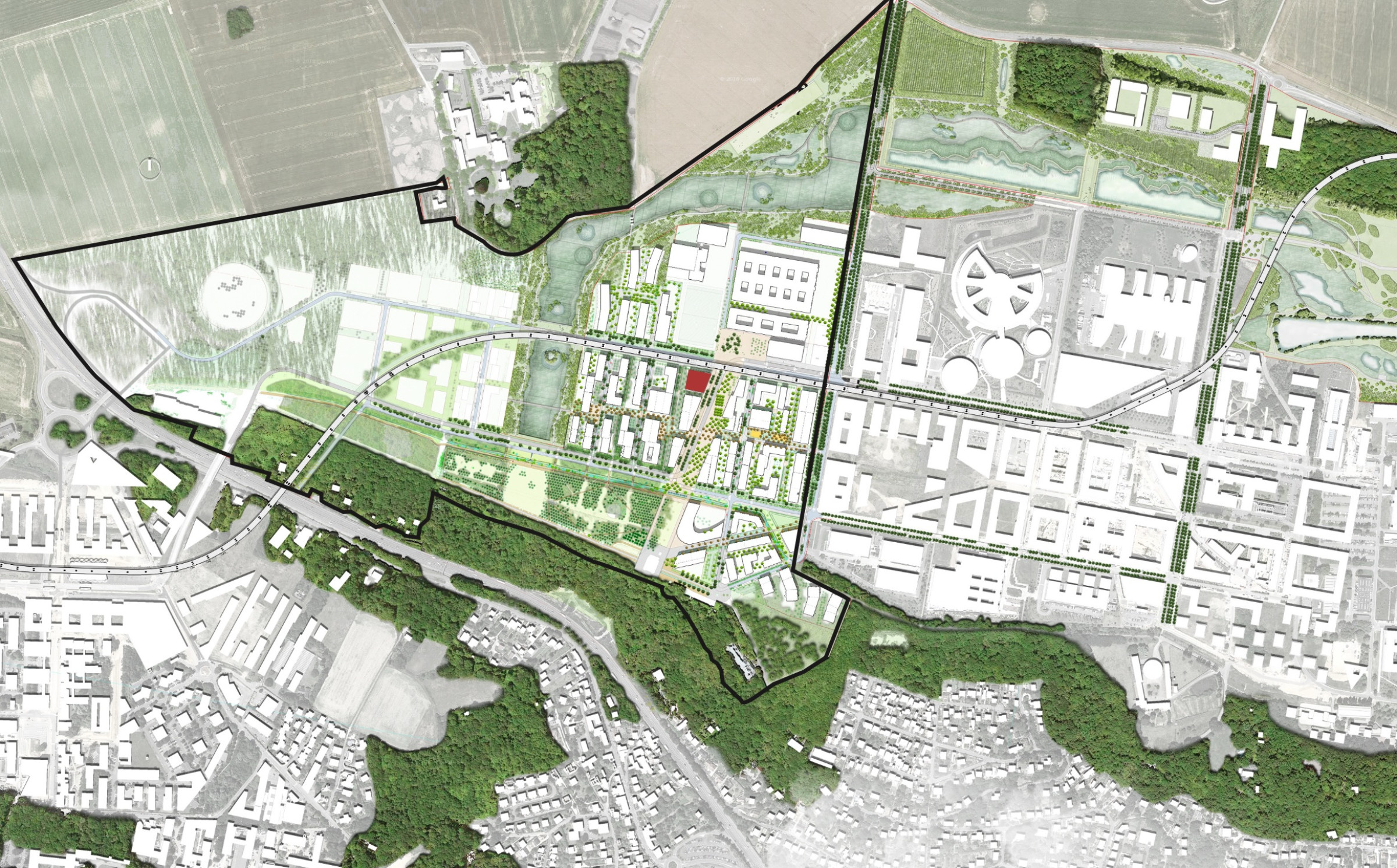
At the heart of the ZAC Corbeville in Orsay, this project—a hybrid residence combining a hotel and student housing—acts as a distinctive urban landmark. Located at the corner of Cours de Corbeville and Boulevard Friedel, opposite the hospital and adjacent to the viaduct of the future metro line, the building is embedded within a dynamic context of education, healthcare, and mobility.
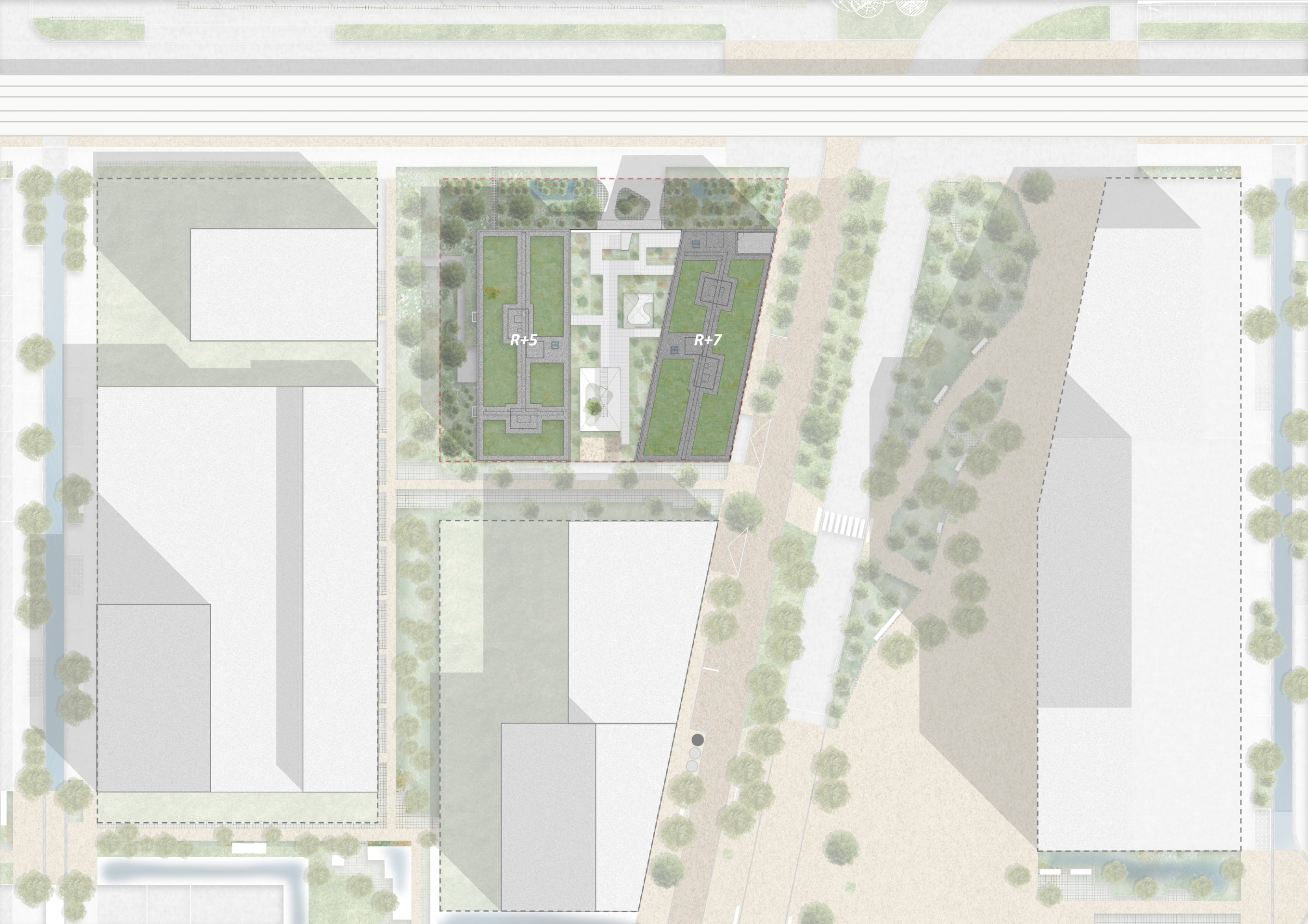
The design translates this context into two carefully articulated volumes: a taller building that accommodates both student housing and the hotel, marking the corner within the urban fabric; and a lower volume dedicated exclusively to student residences, opening up towards the public realm. The southern wing of the student housing, rotated to maximize daylight, creates terraces, views toward the green inner courtyard, and an expressive façade that reinforces the project’s urban character.
The composition is clear and legible, with orientation and sunlight shaping the form.
The architecture is grounded in separation and encounter. Distinct entrances and circulation routes ensure calm and privacy, while shared spaces—from a large communal rooftop terrace to a green patio—encourage interaction and community building. The recessed volume creates a generous forecourt on the northern side, a green transitional zone that softens the relationship with the city and marks the entrance.
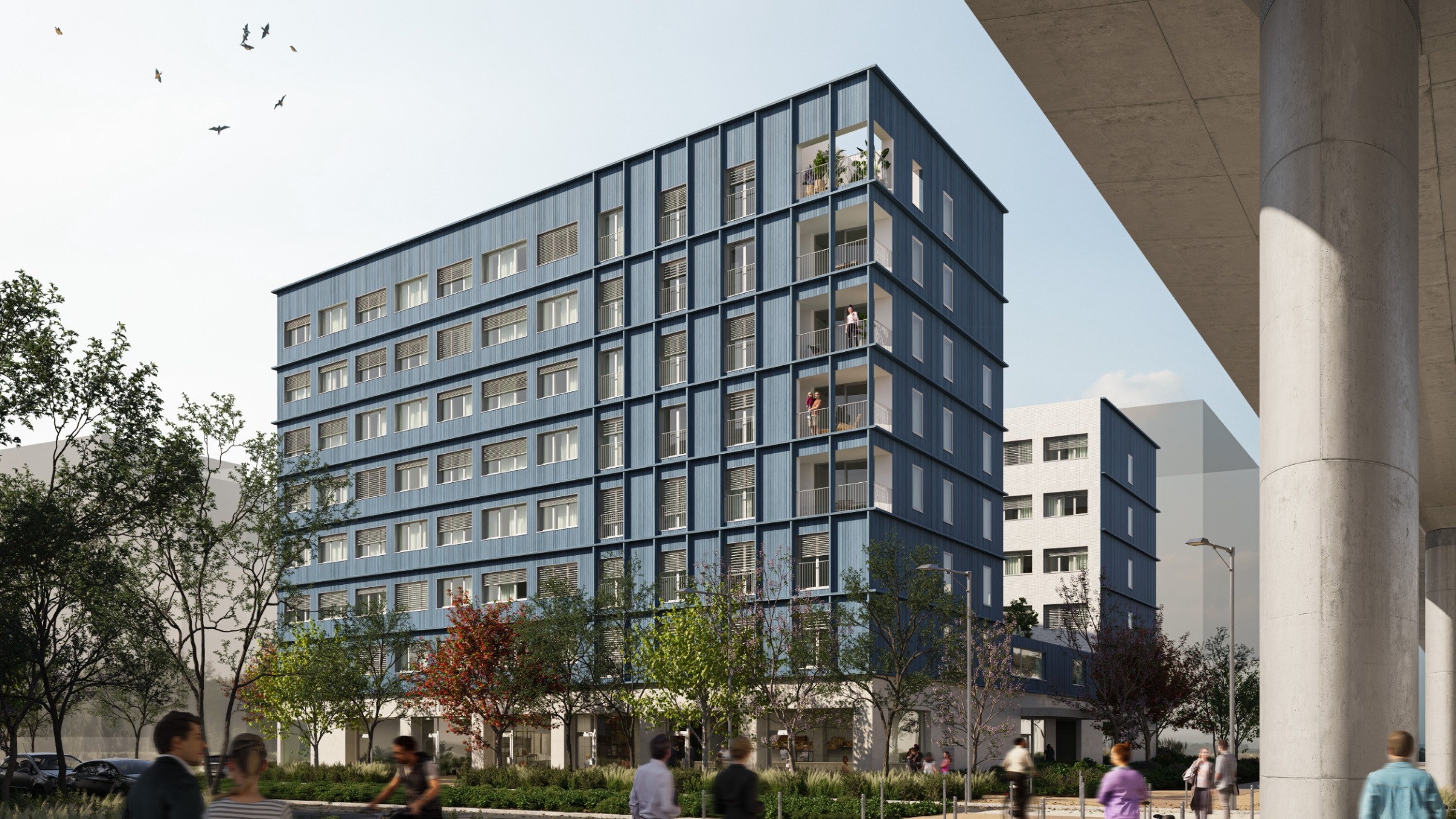
Materialization is based on contrast, robustness, and contextual integration. The basement and plinth are executed in cast-in-place and bush-hammered concrete, chosen for durability in public areas. The two upper volumes are constructed in a timber–concrete hybrid structure, achieving a significant reduction in embodied carbon. The perimeter façades are clad in petroleum-blue wooden panels that add depth and expressiveness, contrasting with the smooth white inner façades.
Landscape design serves as a driver of ecological coherence and biodiversity. Green zones, terraces, and rooftop gardens connect with the public realm and strengthen the ecological network. Native planting, climate-adaptive species, and integrated nesting spaces for birds, insects, and bats create a rich microclimate centered on comfort and an enhanced experience of nature.
The result is a project that is more than a building: an urban place where temporary and permanent living intersect, and where architecture, landscape, and context together generate a new dynamic for the neighborhood.
Program
Residential, Leisure, Masterplan
Status
In execution
Theme
The void – the space in between, Giving back to society, Cross-pollination
Start design
2024
Client
Vinci Immobilier
Area
6.381m²
Location
Orsay, Paris
Procedure
Private assignment
Designteam
BEEL Architecten i.c.w. Pablo Katz
MEP
Groupe Bastide Bondoux
Structure
C&E Ingénierie
Acoustics
Gamba
Landscape
Coloco
Other engineering company
Masterplan: UAPS